Our team is developing drug candidates that primarily focus on de-risked, clinically validated targets—biological pathways already shown to play a key role across a range of conditions. By building on proven scientific insights, we aim to translate this knowledge into therapeutic strategies with a greater likelihood of success and meaningful impact for patients.

BiotechTV Interview: With clinical validation that has been seen on the target from a large pharma, Contineum has moved its LPAR1 antagonist aggressively into the clinic for IPF.
LPAR1 Antagonists
A Potential Key to Arrest Inflammatory & Fibrotic Disease Processes
LPAR1 Antagonists in Inflammatory & Fibrotic Diseases
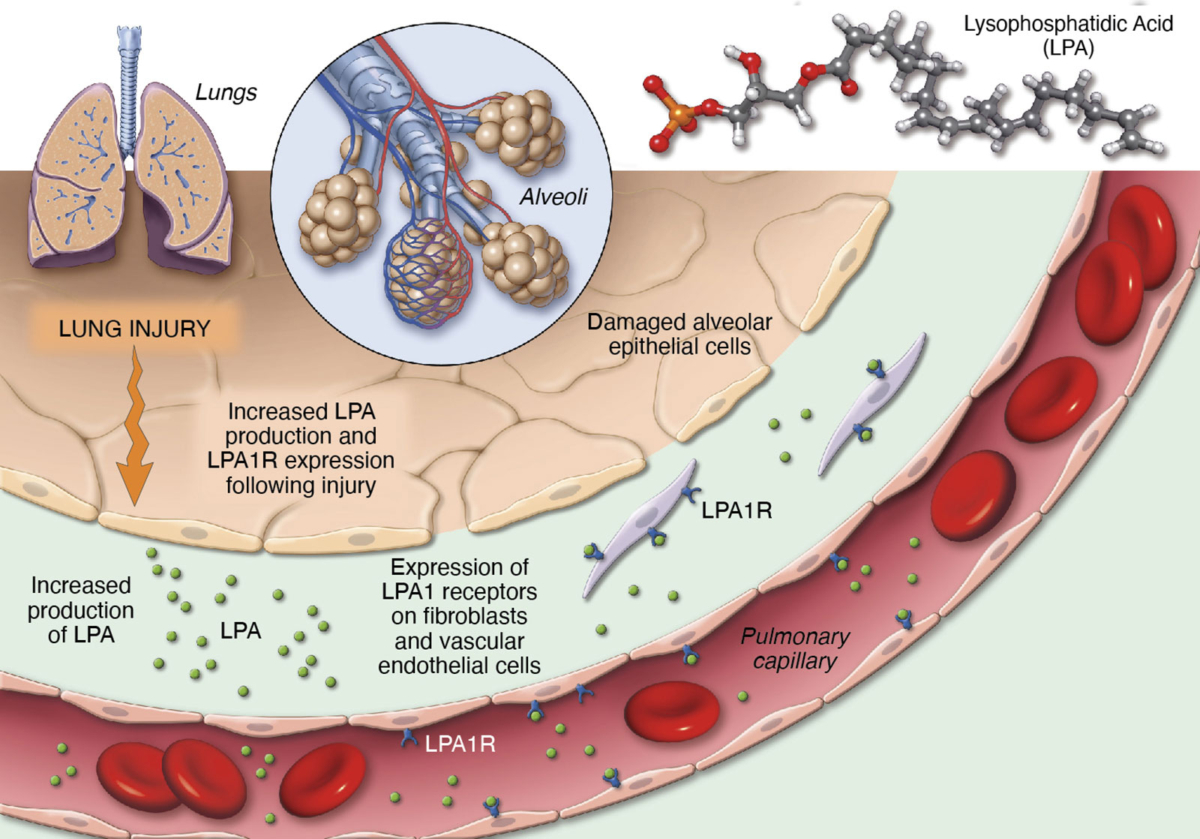
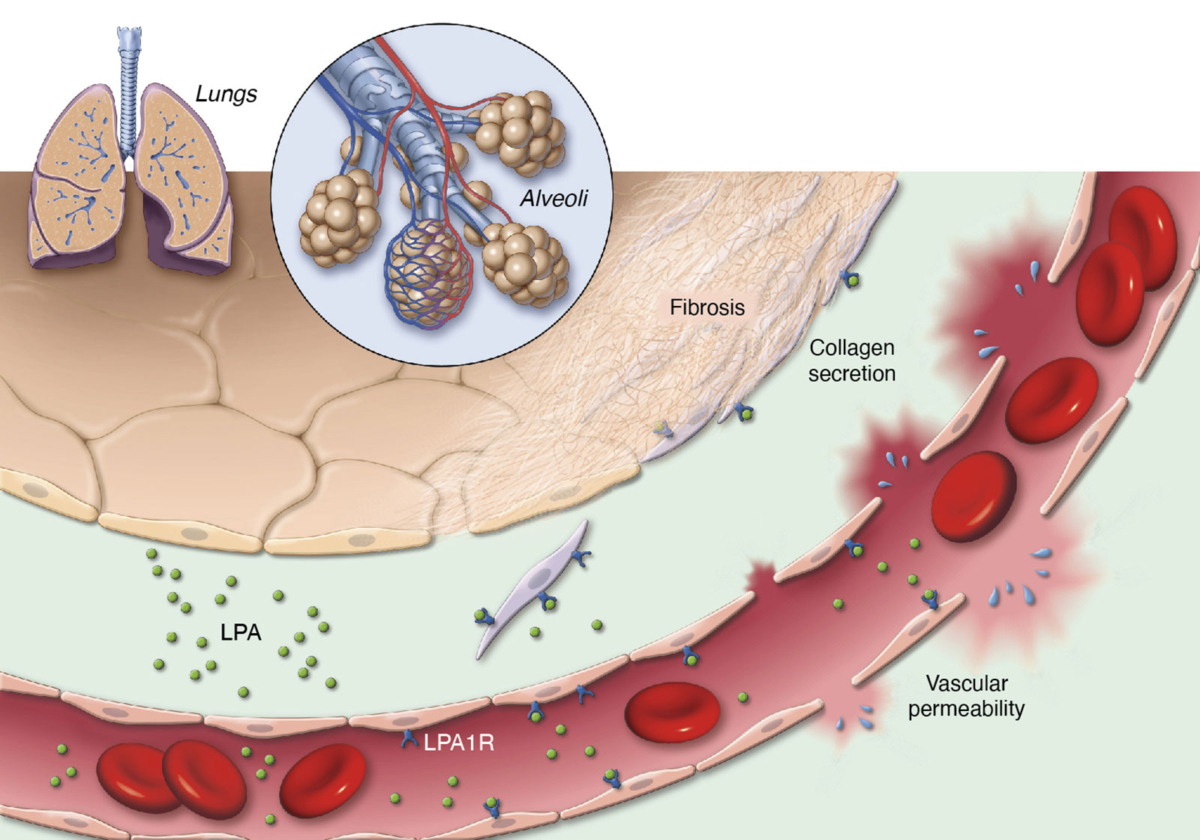
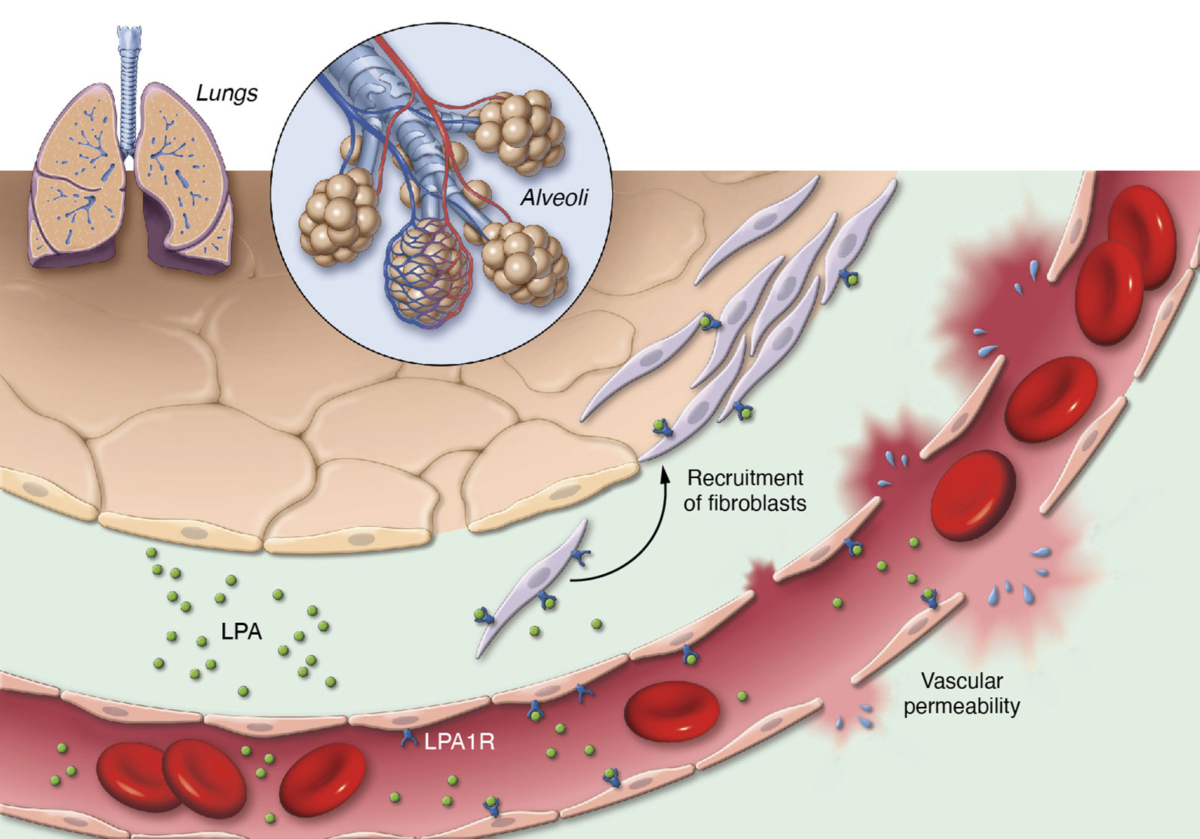
Lysophosphatidic acid (LPA) is a pro-inflammatory lipid that regulates numerous cellular functions and is also recognized as a novel mediator of wound healing and tissue fibrosis. LPA signals through a family of six G protein-coupled receptors – LPA1 to LPA6. The LPA1 receptor specifically plays a central role in several inflammatory and fibrotic diseases.
We are advancing our LPAR1 antagonist, PIPE-791, as a best-in-class therapy in idiopathic pulmonary fibrosis (IPF).
Blocking LPAR1 inhibits key steps in the fibrosis pathway
Hover on images to zoom
M1R Antagonists
A Potential Way to Restore Connectivity
M1R Antagonists in Depression
The cholinergic neurotransmitter system was first implicated in the pathophysiology of mood disorders in the 1970s. Anti-cholinergic drugs were reported to cause feelings of wellbeing in patients, and treatment with non-selective muscarinic antagonists blocked the depressive effects of physostigmine.
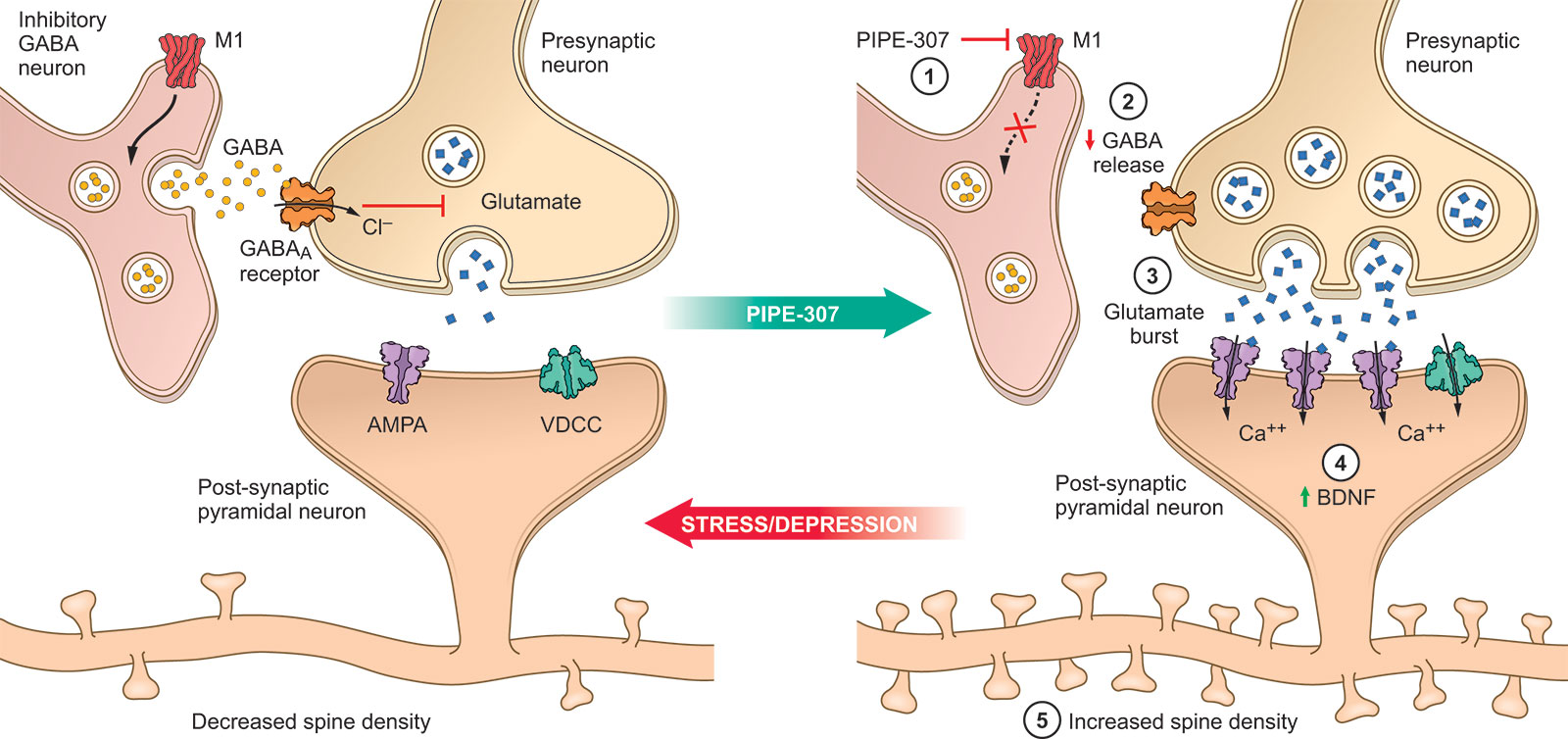
Our proposed mechanism involves M1 muscarinic receptor (M1R)-dependent synaptogenesis in pyramidal neurons in the prefrontal cortex. This effect is directed by blocking M1Rs located on inhibitory gamma-aminobutyric acid (GABA) neurons, which promotes excitatory transmission leading to increased brain-derived neurotrophic factor release and dendritic spine formation.
Pursuant to a licensing agreement, Janssen Pharmaceutica NV, a Johnson & Johnson company is developing our internally discovered M1R antagonist as a potential therapy in major depressive disorder.
Blocking M1R restores synaptic connectivity